
Dynamic Center Alignment
This tutorial guides you through setting up center alignment positioning. Center alignment allows variant and non-variant objects to automatically remain centered when the variant text changes.
Video Tutorial
1. Mark an Object as a Variant
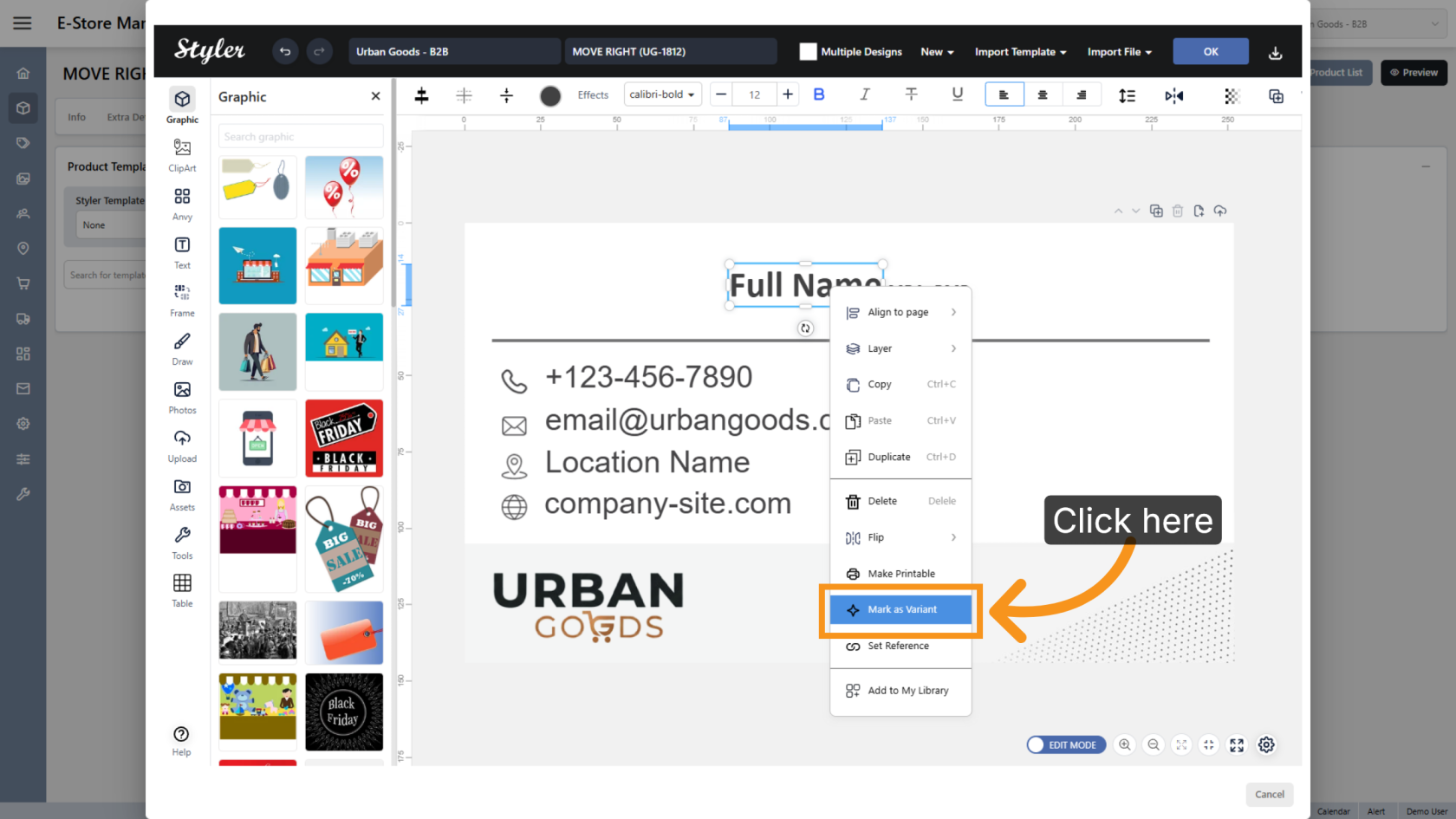
Right-click the object you want users to edit, then select Mark as Variant.
2. Choose a Variant Type
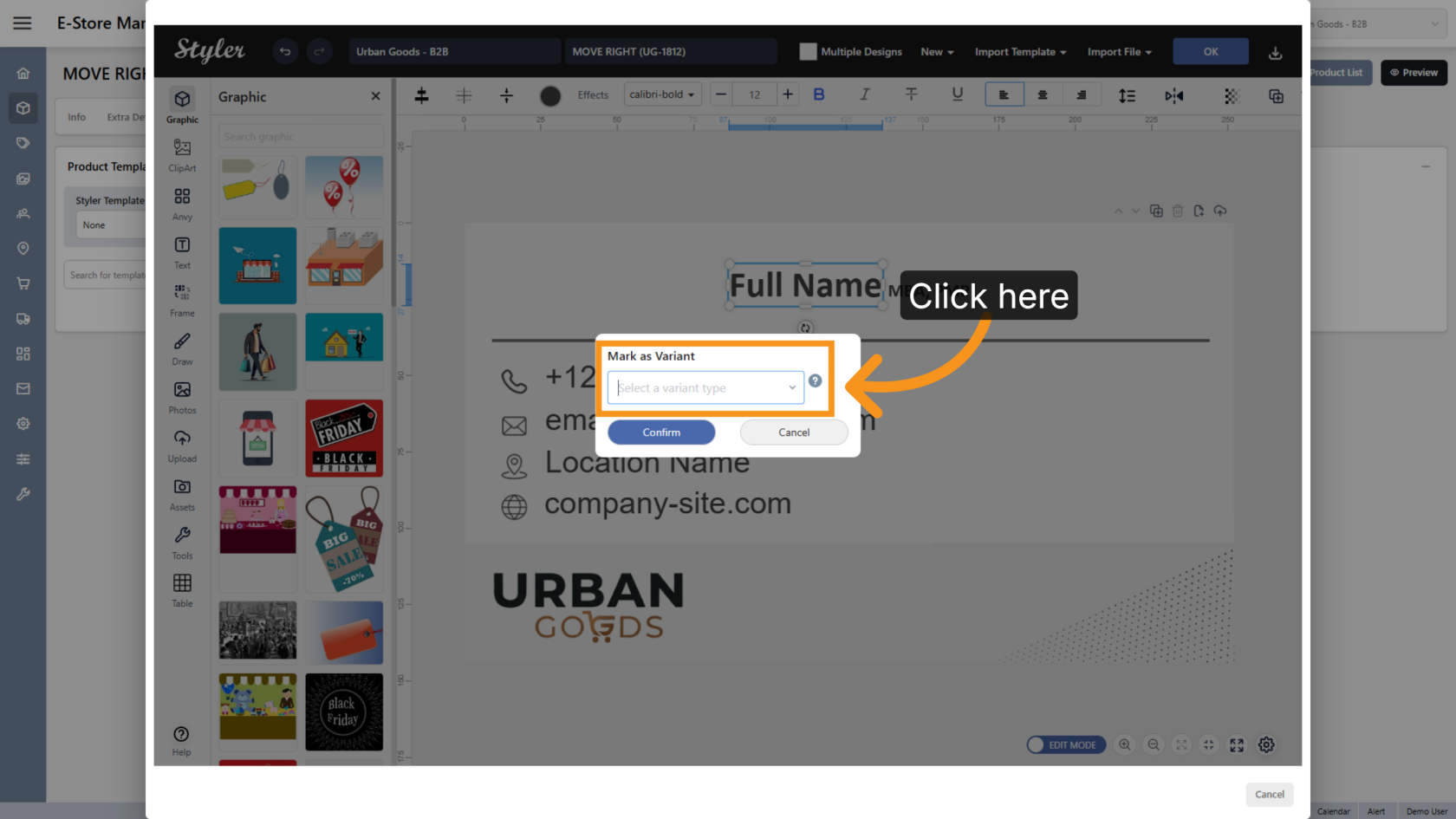
Click Select a variant type and choose the appropriate type for the editable field. The variant type should clearly describe the information users need to enter.
3. Open Reference Settings
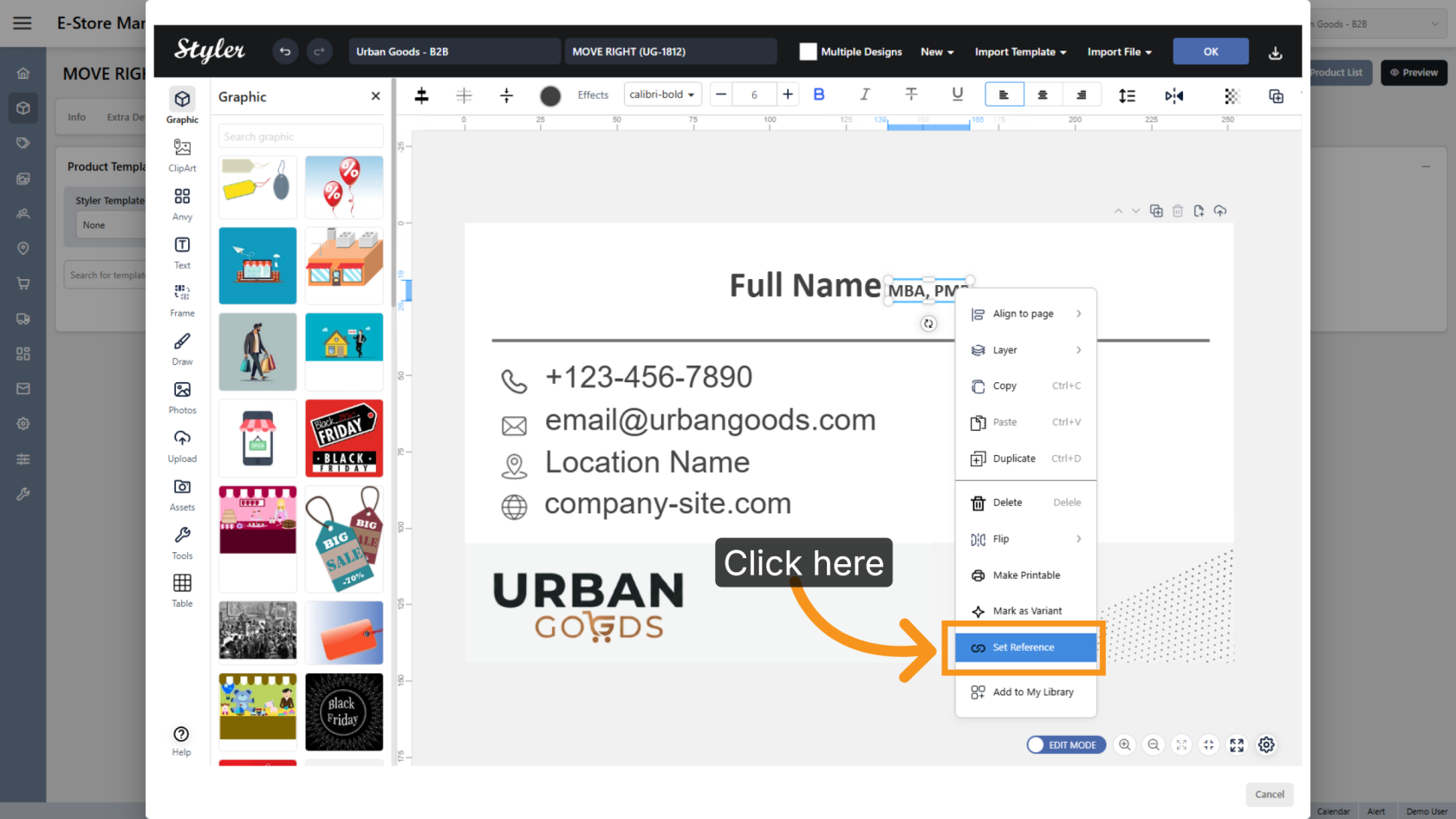
Right-click the non-variant object that should move together with the variant object, then select Set Reference.
4. Add a New Reference
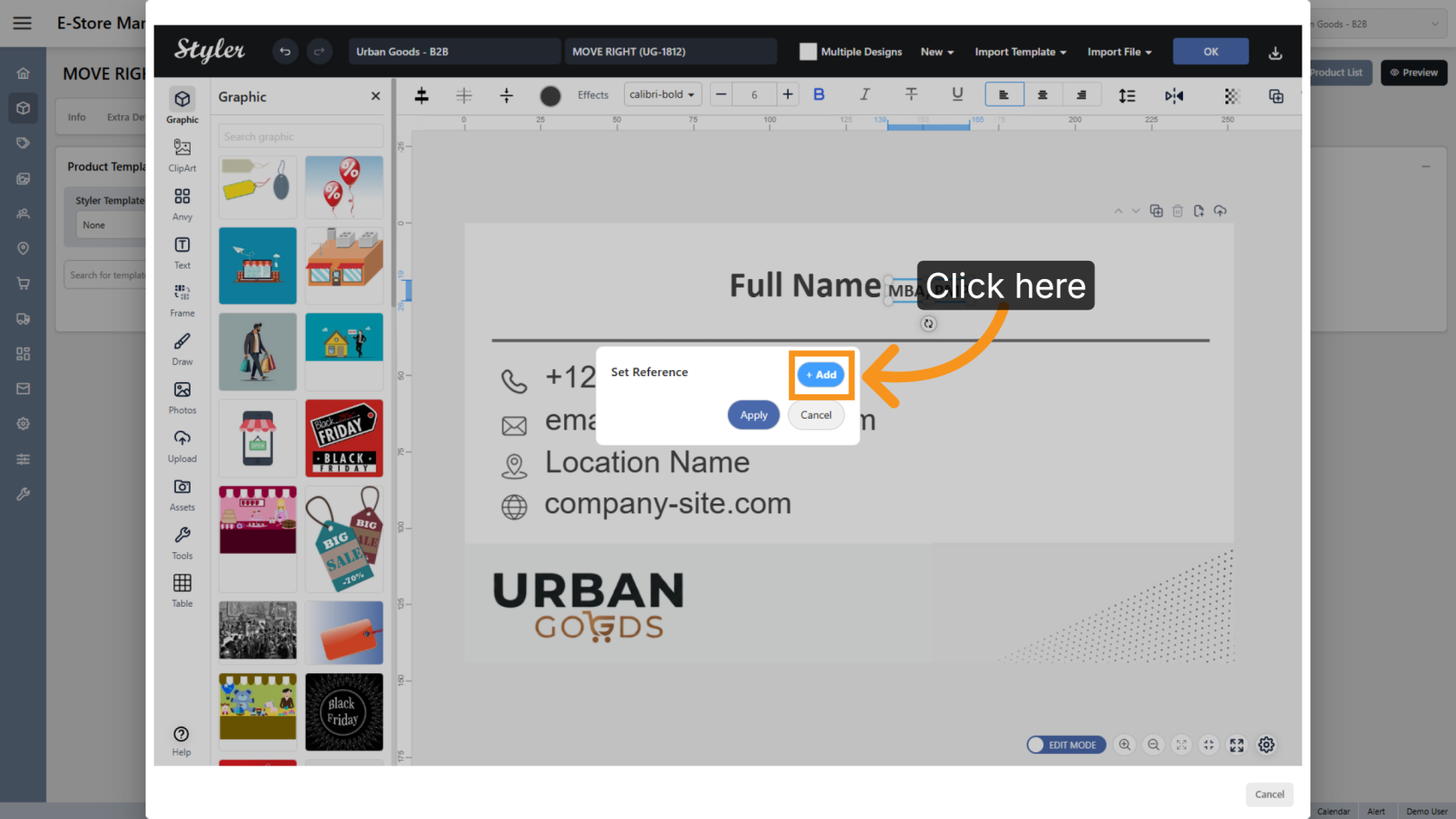
Click Add to create a new reference configuration.
5. Configure the Adjust Setting
Set Adjust to Center H so the object can automatically reposition while maintaining horizontal center alignment.
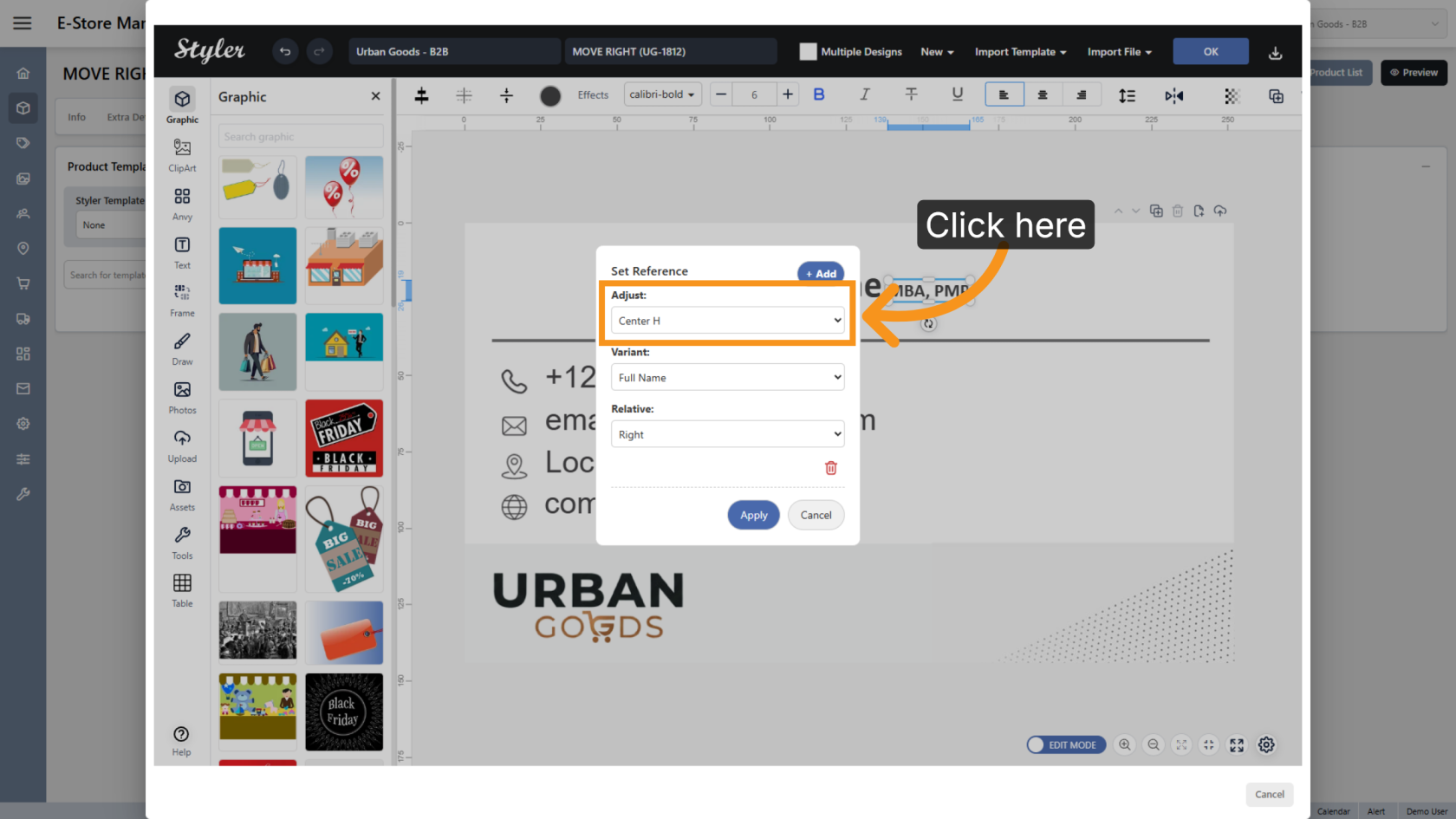
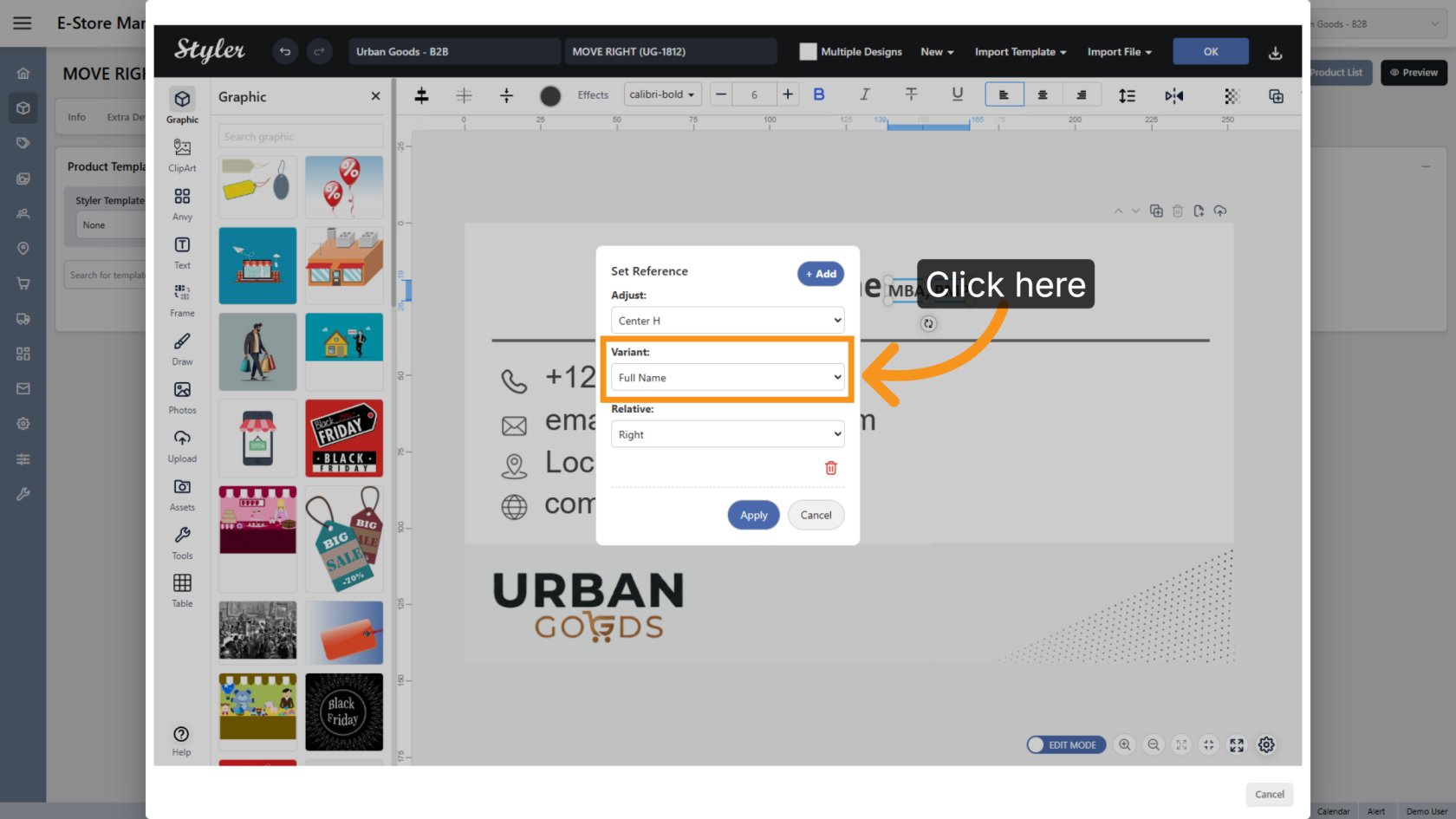
6. Select the Variant Reference
Choose the variant object you previously configured.
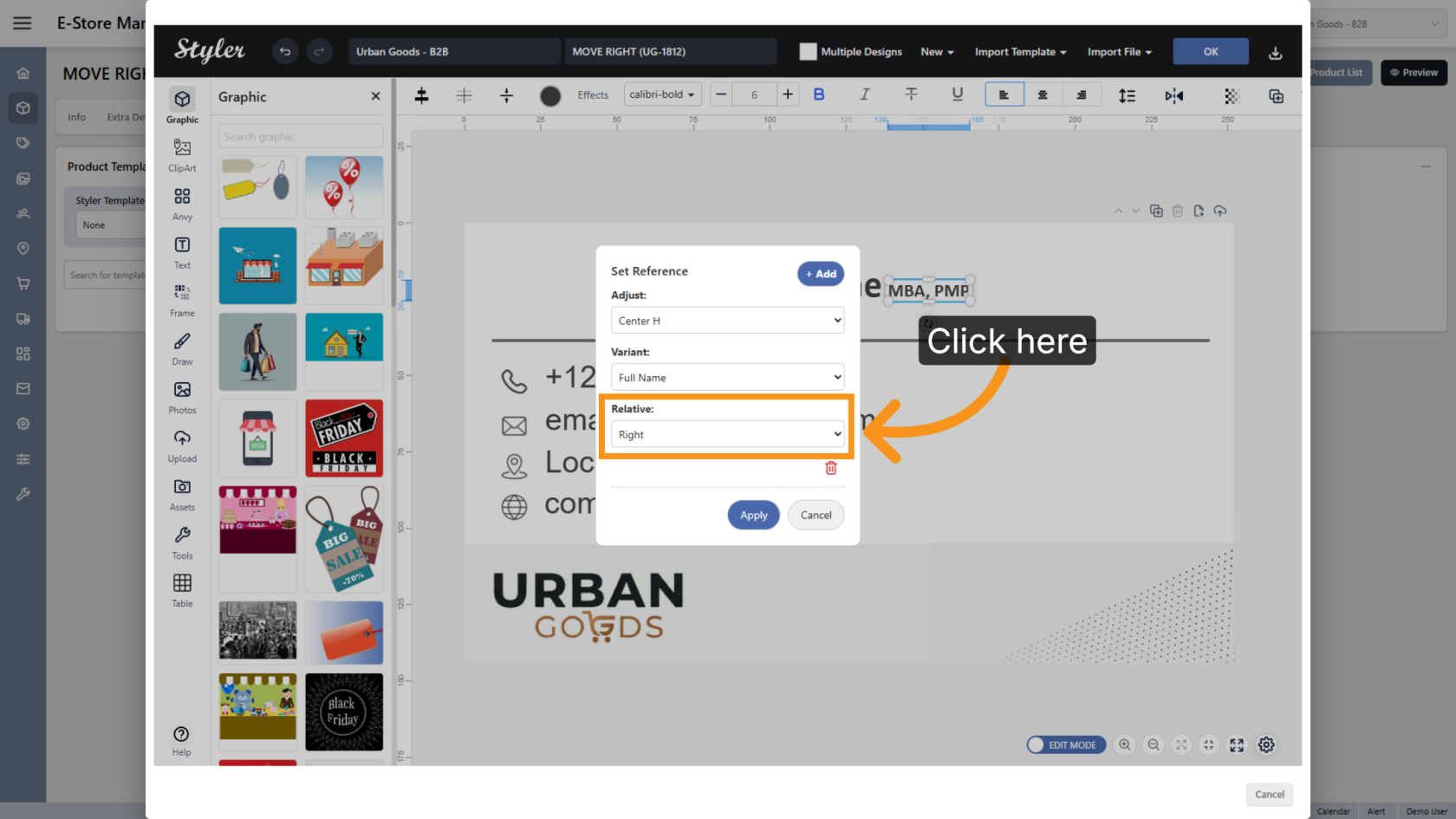
7. Configure the Relative Position
Select the relative position of the non-variant object compared to the variant object.
For example, if the object should remain on the right side of the variant text, select Right.
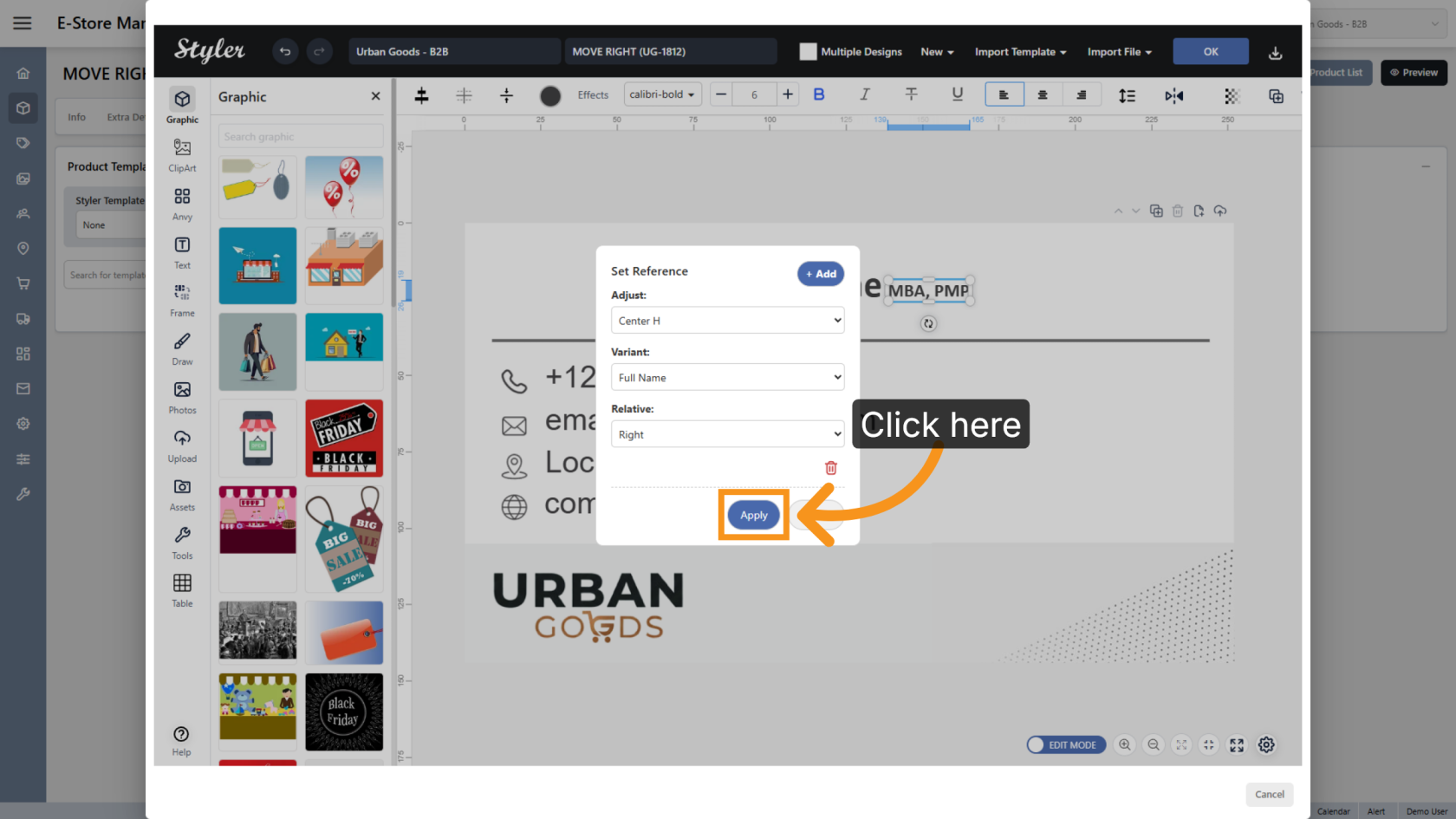
8. Apply the Reference Settings
Click Apply to save the reference configuration.
9. Confirm the Configuration
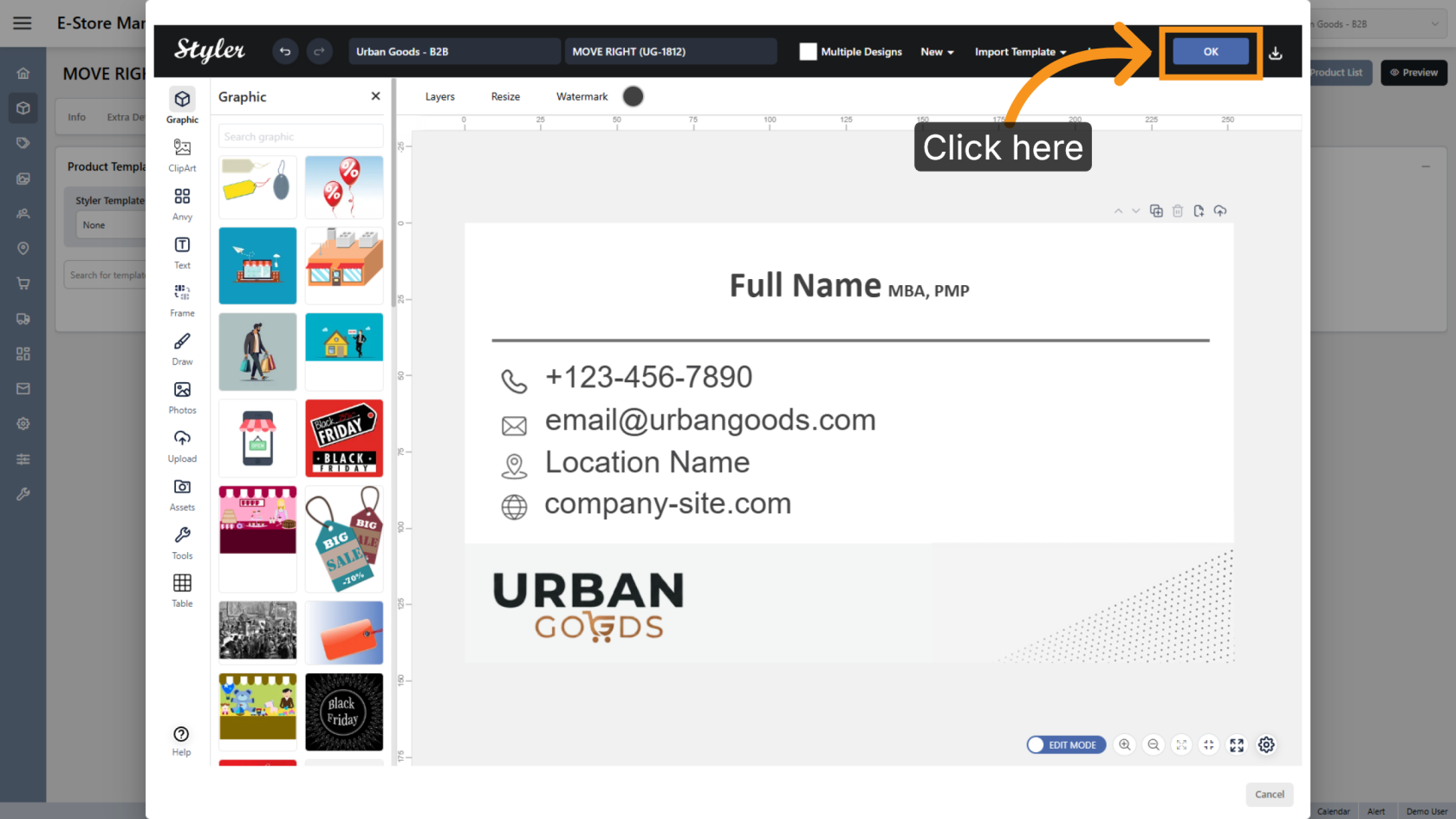
Click OK to finalize the settings.
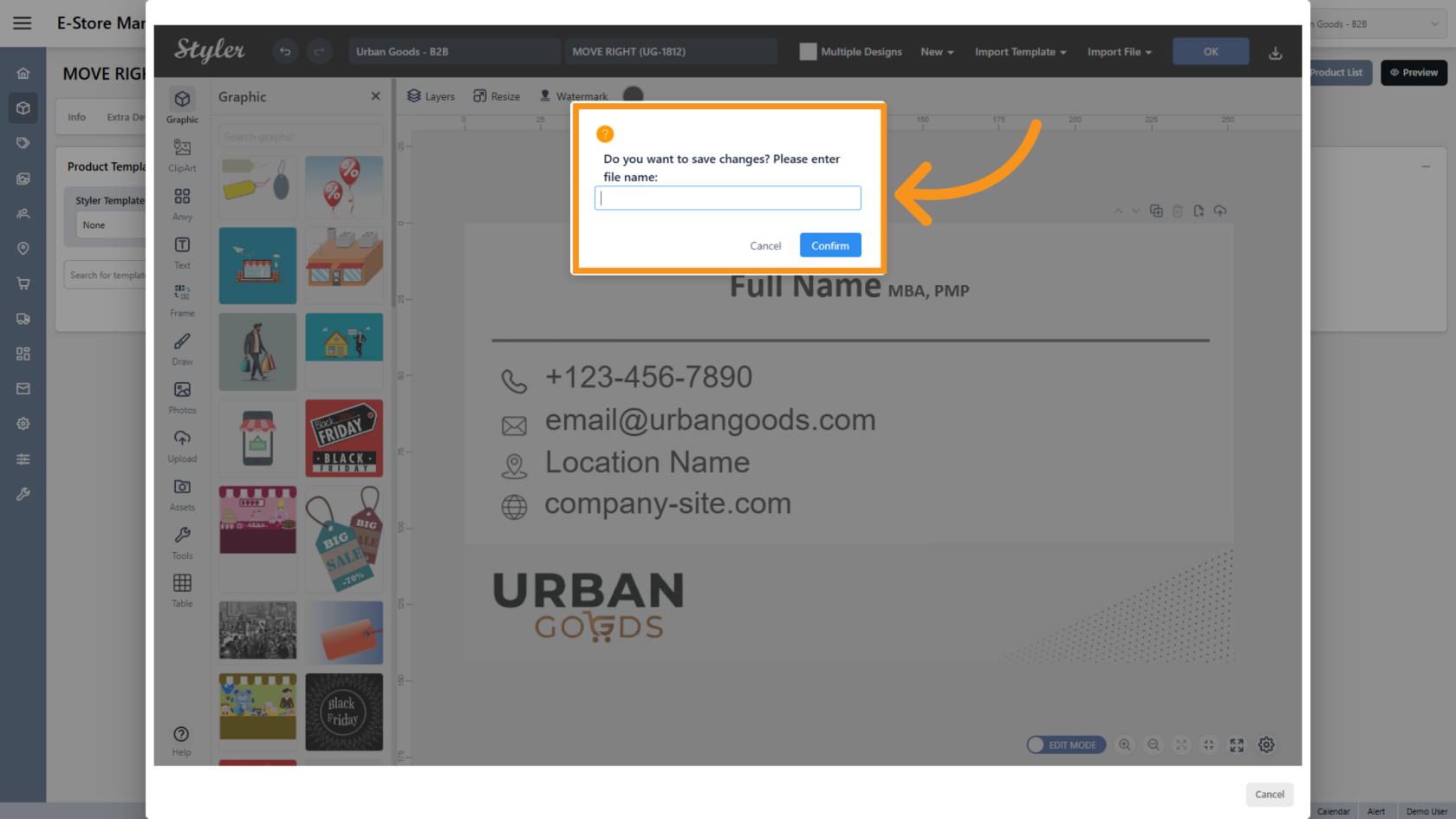
10. Enter the File Name
Enter the file name, then click Confirm.
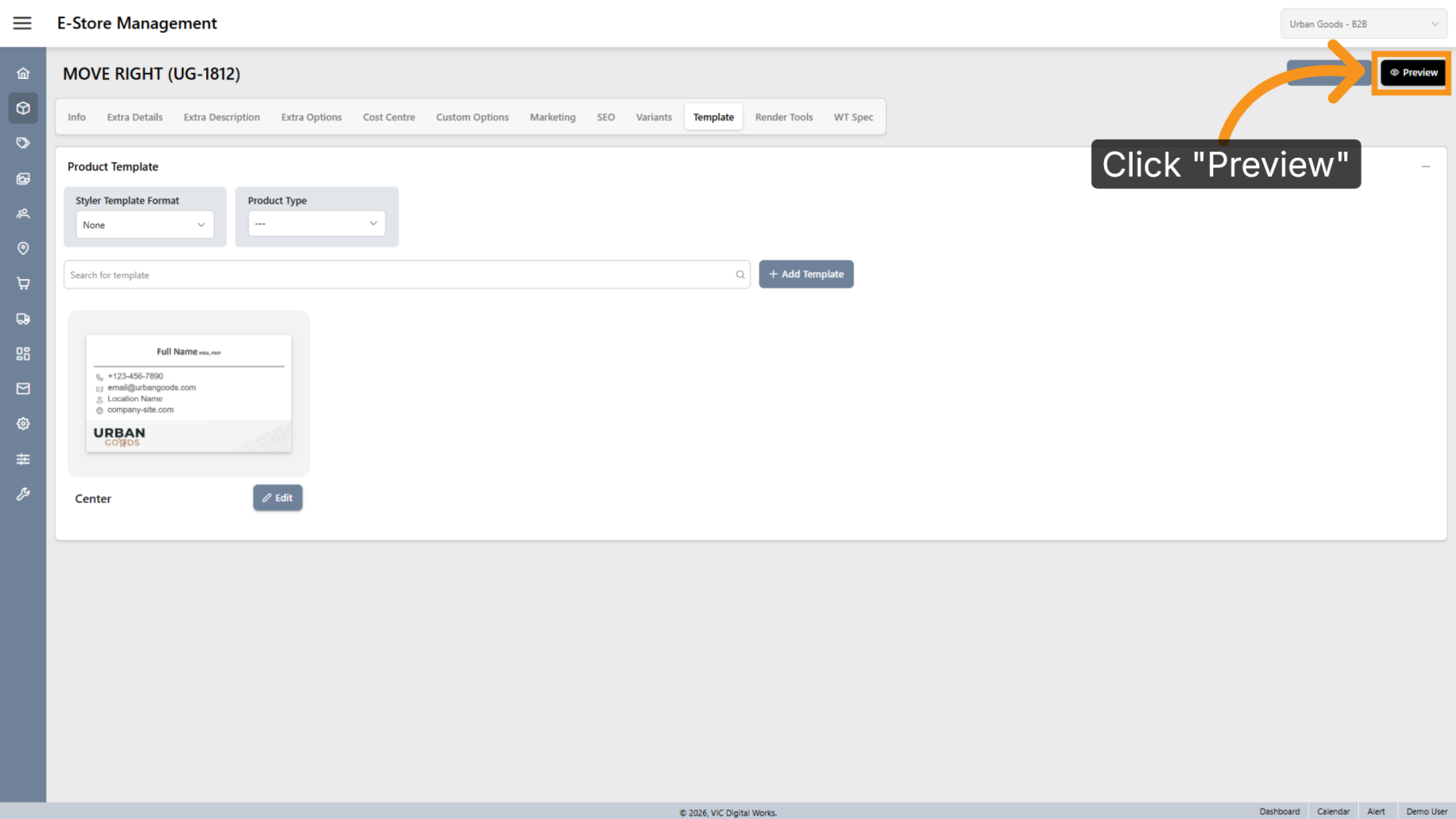
11. Preview the Design
Click Preview to review the final layout.
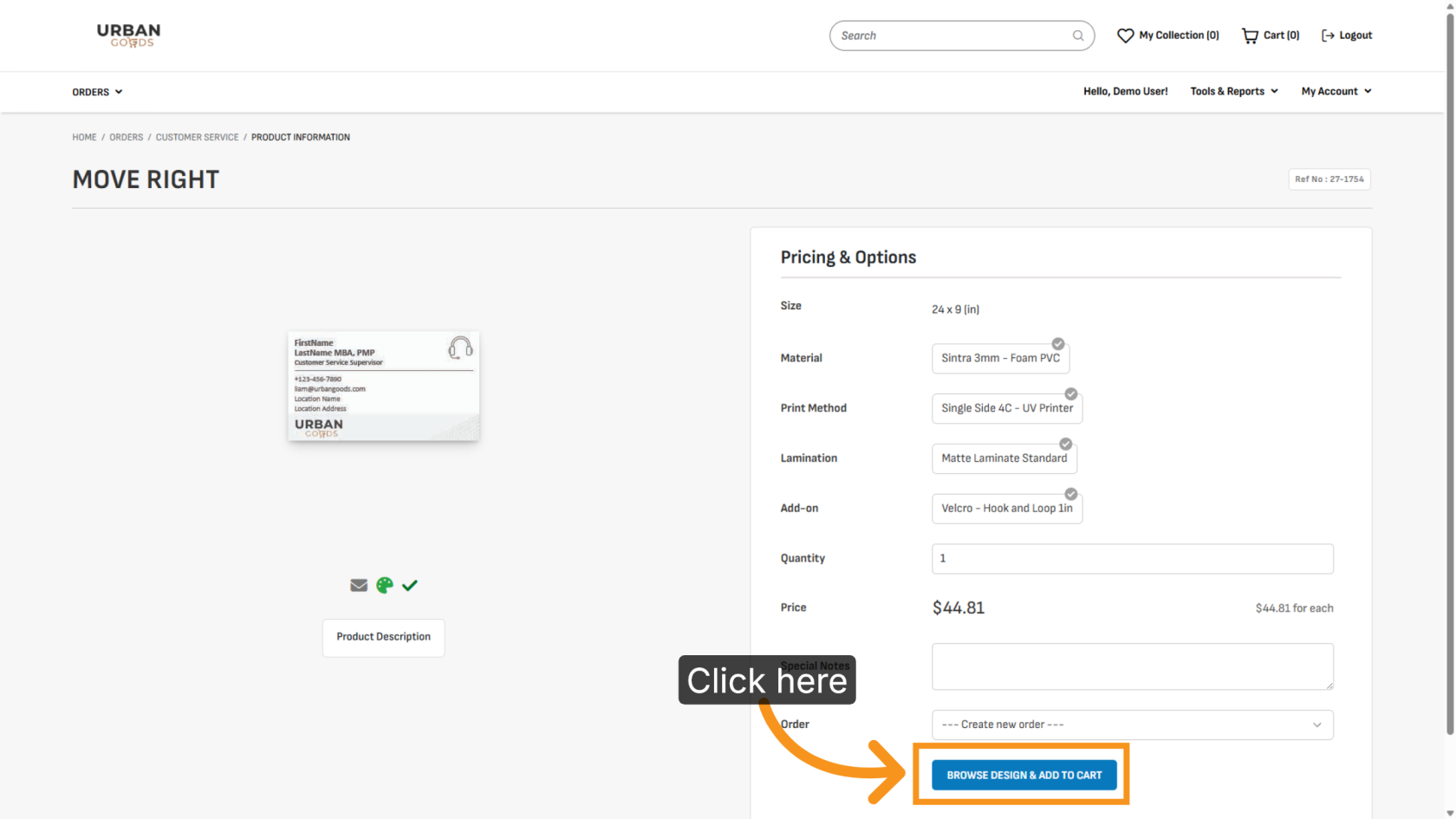
12. Browse Available Designs
Click BROWSE DESIGN & ADD TO CART to select a design for printing.
13. Edit Variant Values
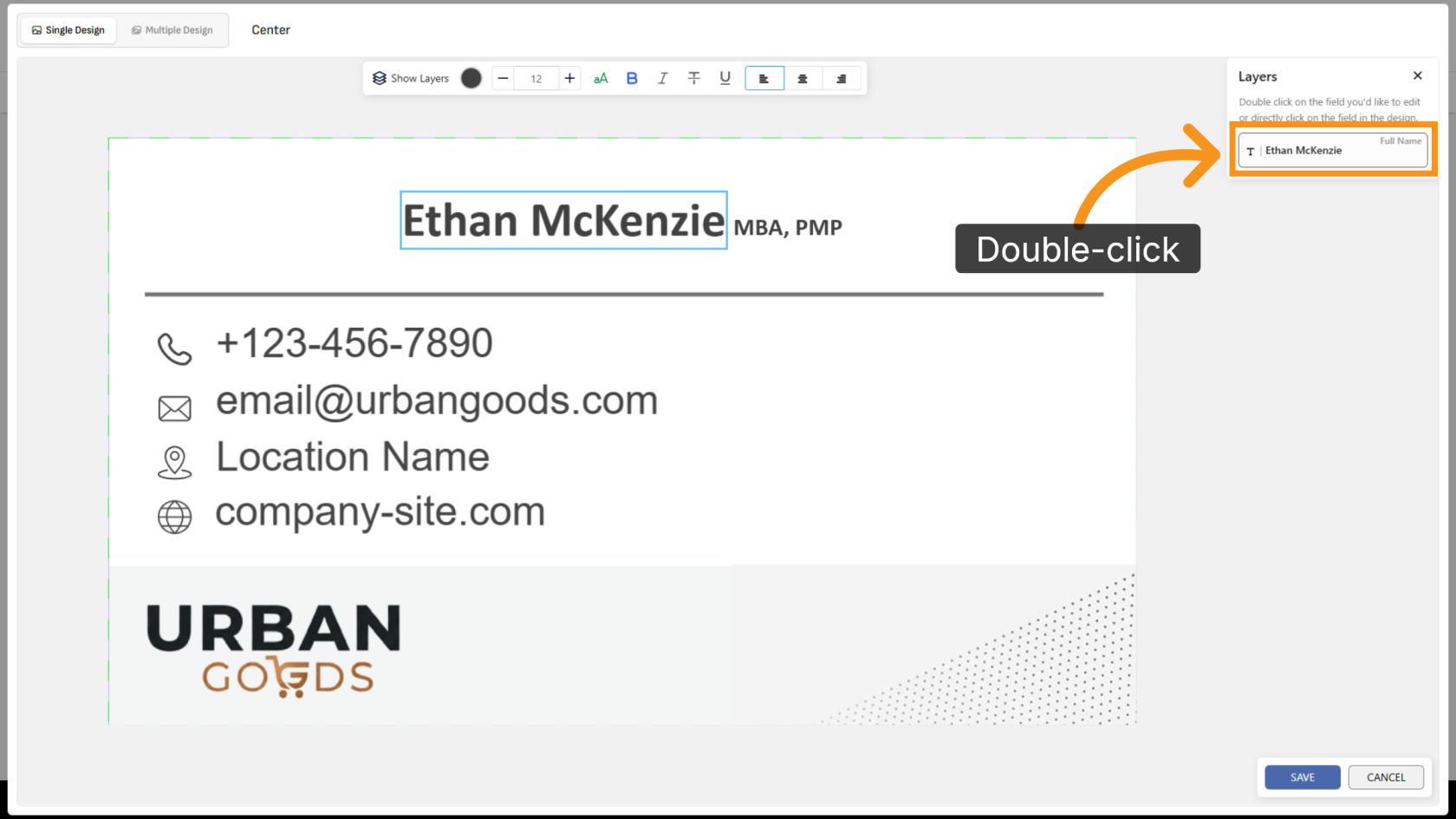
Double-click the variant layer, then enter the value you want to display in the design.
14. Review the Dynamic Alignment
When the variant text changes, the referenced objects will automatically adjust their positions while maintaining center alignment.
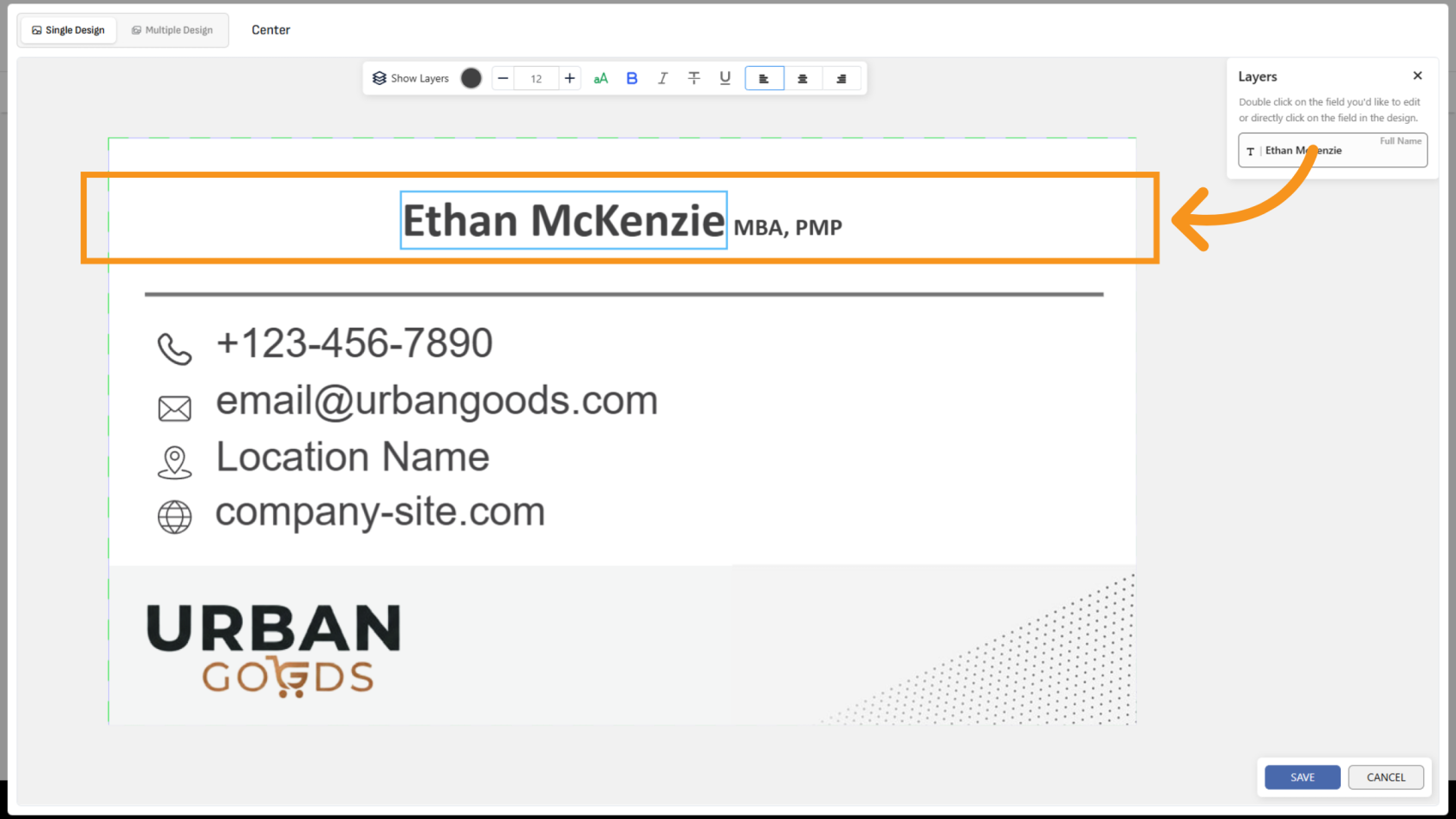
You have successfully configured center alignment positioning. This setup helps maintain balanced alignment and spacing when editable text changes dynamically.